In the ever-evolving world of pet nutrition, few topics have generated as much debate and confusion as grain-free dog food. What started as a niche market for dogs with specific allergies blossomed into a massive trend, fueled by clever marketing and the human “clean eating” movement. However, a 2018 FDA investigation into a potential link between grain-free diets and a serious heart condition called dilated cardiomyopathy (DCM) brought the trend to a screeching halt, leaving pet owners questioning everything they thought they knew.
So, what’s the truth? Are grains bad for dogs? Is grain-free food dangerous? Let’s sift through the noise and separate fact from fiction to help you make the best nutritional choices for your furry friend.
The Rise of Grain-Free: Marketing vs. Science
The grain-free trend didn’t emerge from a sudden scientific discovery. Instead, it was largely driven by marketing campaigns that tapped into human dietary trends. The logic seemed sound to many: dogs are descended from wolves, and wolves don’t eat grains, so dogs shouldn’t either. Grains like corn, wheat, and soy were demonized as “fillers” that caused allergies and other health issues.
– Fact: Dogs are not wolves. Thousands of years of domestication have significantly altered their physiology, including their ability to digest carbohydrates. Studies show that dogs possess genes for amylase, the enzyme that breaks down starch, which wolves lack. While dogs are primarily carnivores, they are functionally omnivores and can thrive on a diet that includes grains.
– Fact: True grain allergies in dogs are incredibly rare. According to veterinary dermatologists, the most common food allergens for dogs are proteins like beef, dairy, chicken, and lamb. Grains are far down the list. If your dog has itchy skin or digestive issues, it’s much more likely to be a reaction to the meat source than the grains.
The FDA Investigation and the DCM Link
In July 2018, the FDA announced it was investigating a potential connection between certain diets and canine dilated cardiomyopathy (DCM). DCM is a disease that causes the heart’s main pumping chamber to become enlarged and weak, affecting its ability to pump blood effectively. While DCM has a genetic component in some breeds like Dobermans and Great Danes, the FDA began receiving reports of the condition in breeds not typically predisposed to it, such as Golden Retrievers and Labrador Retrievers.
A common thread among these cases was diet. The majority of the affected dogs were eating “grain-free” foods, specifically those containing high proportions of peas, lentils, other legume seeds (pulses), and potatoes as main ingredients. These ingredients were often used to replace grains as a carbohydrate source.
– Fact: The FDA investigation is ongoing and complex. They have not definitively declared that grain-free diets cause DCM, but they have identified a strong correlation. The exact mechanism is still unknown, but one theory revolves around taurine, an amino acid essential for heart health.
– Fact: While most dogs can synthesize their own taurine from other amino acids (methionine and cysteine) found in meat, some of the ingredients commonly used in grain-free foods, particularly legumes like peas and lentils, may interfere with this process or reduce the bioavailability of these precursor amino acids. Some studies have shown lower taurine levels in dogs fed certain grain-free diets.
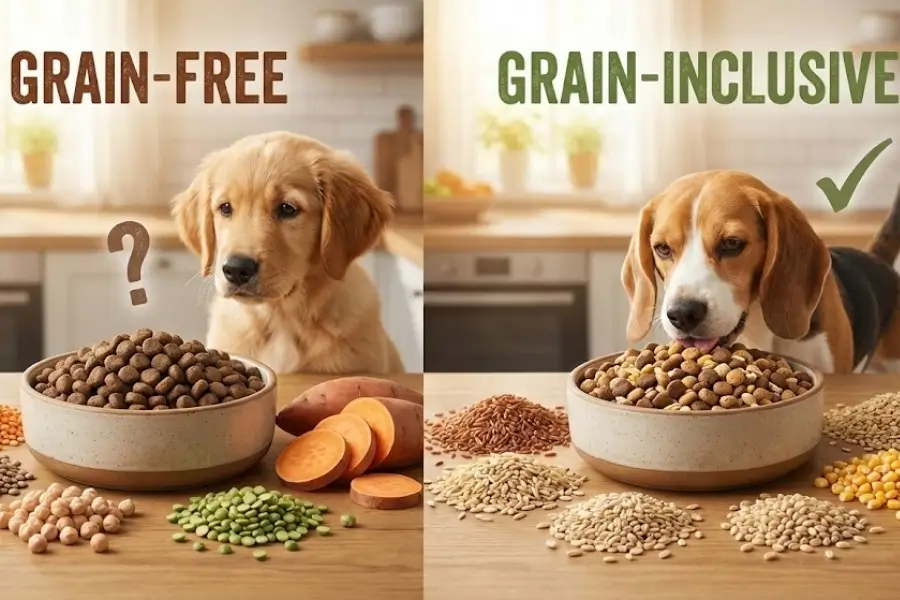
The image above visually represents the key ingredient concern. On the left are legumes and potatoes, which are commonly found in high amounts in grain-free diets linked to DCM. On the right are whole grains like rice, oats, and corn, which have not been implicated in the issue and provide essential nutrients.

Navigating the Dog Food Aisle: What Should You Do?
The most important takeaway is that there is no single “best” diet for all dogs. Each dog is an individual with unique nutritional needs based on their age, breed, activity level, and health status.
Here are some practical steps to take:
– Don’t Panic, But Be Informed: If you are currently feeding a grain-free diet, there’s no need to panic. However, it is prudent to be aware of the potential risks. If your dog is a breed not typically predisposed to DCM and you are feeding a grain-free food high in legumes or potatoes, consider discussing a diet change with your veterinarian.
– Talk to Your Veterinarian: Your vet is your best resource for nutritional advice. They can help you evaluate your dog’s current diet and recommend a food that is appropriate for their individual needs. They may also recommend screening for heart health if you have concerns.
– Look for Science-Backed Brands: Choose pet food companies that employ full-time veterinary nutritionists, conduct feeding trials according to AAFCO standards, and have rigorous quality control measures. These companies are more likely to produce nutritionally balanced and safe foods.
– Ignore the Hype: Don’t be swayed by marketing buzzwords like “grain-free,” “ancestral,” or “premium.” Focus on the nutritional adequacy statement on the label and the reputation of the manufacturer.
– Consider Grain-Inclusive Options: Unless your dog has a diagnosed grain allergy, there is no evidence that a grain-free diet is healthier. High-quality, grain-inclusive foods from reputable brands have been fed safely to millions of dogs for decades without being linked to DCM. Whole grains provide valuable nutrients like fiber, vitamins, and minerals.
Conclusion
The grain-free debate is a perfect example of why it’s crucial to rely on scientific evidence rather than marketing trends when it comes to your pet’s health. By staying informed and working closely with your veterinarian, you can ensure that you are providing your dog with a diet that supports a long, happy, and healthy life.













0 Comments