For new chinchilla owners, one of the most surprising and crucial facts to learn is that these adorable creatures should never get wet. While most pets require regular water baths, bathing a chinchilla in water can lead to serious health issues and even death. The secret to their cleanliness lies not in water, but in dust. Understanding the unique biology of chinchilla fur and the natural bathing habits they’ve evolved is essential for keeping your fluffy friend healthy and happy.
The Science of Chinchilla Fur
To understand why water is so dangerous, we must first look at the chinchilla’s most famous feature: its incredibly dense and soft fur. Chinchillas are native to the high Andes mountains in South America, an environment known for its cold, arid climate. To survive in these freezing temperatures, they evolved the densest fur of any land mammal.
A human has one hair growing from each follicle. A chinchilla has anywhere from 50 to 80 fine hairs sprouting from a single follicle. This extraordinary density creates a plush, insulating layer that traps body heat and keeps the cold out. However, this same feature that is so beneficial in the wild becomes a liability when water is introduced.
Why Water Is a Chinchilla’s Enemy
The problem with getting a chinchilla wet is that their fur is so dense it does not dry like other animals’ fur. When water penetrates this thick coat, it gets trapped close to the skin and can take a very long time to evaporate. This lingering moisture creates a breeding ground for a host of problems.
– The Risk of Hypothermia: Because their fur is designed to insulate, wet fur loses its insulating properties. As the trapped water slowly evaporates, it draws heat away from the chinchilla’s body, causing its core temperature to drop dangerously low.
– The Danger of Fungal Infections: The most common and persistent issue caused by getting a chinchilla wet is a fungal infection known as ringworm. The warm, moist environment created by wet fur trapped against the skin is the perfect breeding ground for fungus.
– Matting and Skin Irritation: Water can also cause the fine hairs of a chinchilla’s coat to clump and mat together. These mats can pull on the skin, causing pain and irritation.

The Solution: Dust Baths
In their natural habitat, chinchillas keep clean by rolling in fine, volcanic ash. This process is replicated in captivity using specially formulated chinchilla dust.
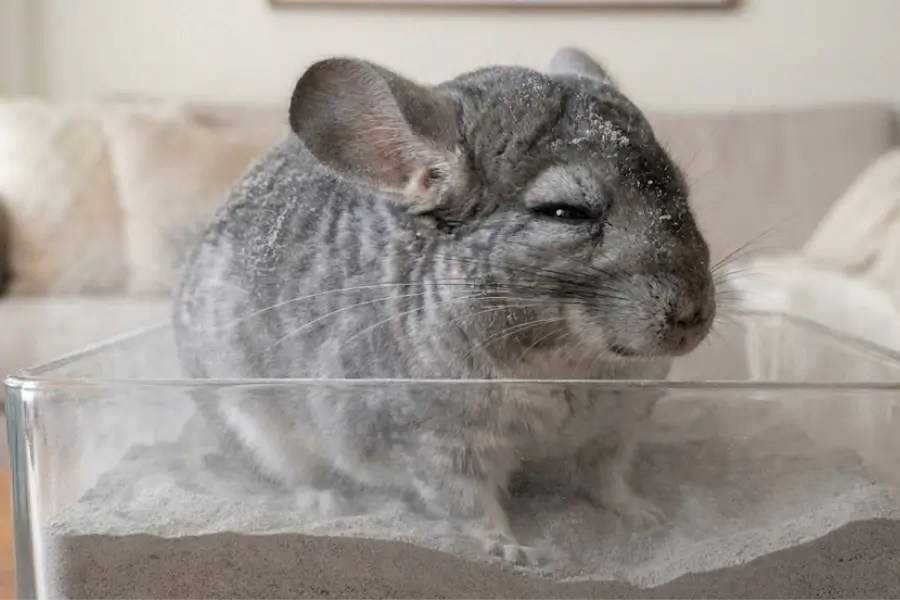
The dust works by penetrating deep into the dense fur down to the skin. It adheres to oils, dirt, and moisture, and as the chinchilla shakes itself off after the bath, the dust carries the debris away with it. The fine particles also help to separate the individual hairs, keeping the coat airy, fluffy, and free of mats.
How to Give a Dust Bath
Providing a dust bath is simple and is one of the most enjoyable parts of owning a chinchilla to watch.
– Choose the Right Dust: Never use play sand or beach sand, as the coarse particles can damage their fur and skin. Always buy dust specifically labeled for chinchillas.
– Select a Container: You can buy a special chinchilla dust bath house or use a sturdy, heavy bowl that won’t tip over, like a glass baking dish or a ceramic bowl.
– Add the Dust: Put about an inch of dust in the bottom of the container.
– Let Them Roll: Place the container in your chinchilla’s play area during their out-of-cage time. They will instinctively hop in and begin flipping and rolling.
– Duration and Frequency: Let them bathe for 10-15 minutes, two to three times a week. Do not leave the dust bath in their cage permanently, as they will likely use it as a litter box.
Conclusion
The golden rule of chinchilla care is simple: keep them dry. Water is a natural enemy to their unique coat and can lead to severe and even fatal health problems. By understanding the science behind their fur and providing regular dust baths, you are mimicking their natural grooming behaviors and ensuring your chinchilla remains healthy, happy, and luxuriously soft for years to come.












0 Comments