
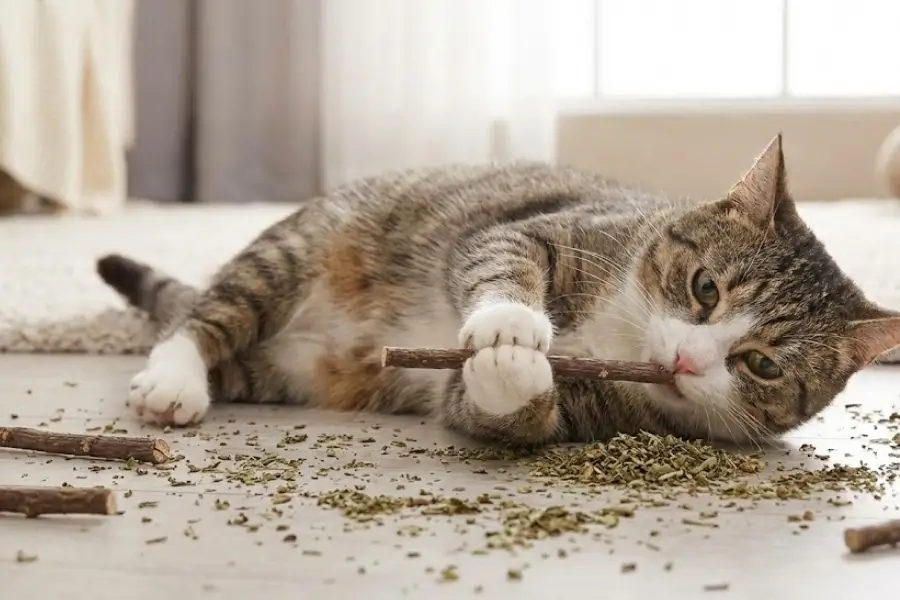
For many cat owners, catnip is a source of endless entertainment. A sprinkle of the dried herb, and their dignified feline friend transforms into a purring, rolling, playful ball of fur. But what happens when your cat is one of the many who just… don’t get it? They sniff it, give you a look of mild disdain, and walk away. If this sounds familiar, don’t despair! There’s a potent alternative that might just be the key to unlocking your cat’s inner kitten: silvervine.
This article will delve into the world of these two fascinating feline attractants, exploring what they are, how they work, and why silvervine might be the perfect solution for cats who turn their noses up at catnip.
What is Catnip?
Catnip (Nepeta cataria) is a common herb belonging to the mint family. It’s native to Europe and Asia but has been naturalized in many other parts of the world, including North America. The magic behind catnip lies in a volatile oil found in its leaves and stems called nepetalactone.
When a susceptible cat inhales nepetalactone, it binds to receptors in their nasal tissue, triggering a euphoric reaction in the brain. The effects are often described as a combination of playfulness, relaxation, and pure joy. Common behaviors include rubbing, rolling, cheek-rubbing, vocalizing, and a burst of energy followed by a period of calm. The effects typically last for 5 to 15 minutes, after which the cat becomes temporarily immune to the scent for an hour or so.
What is Silvervine?
Silvervine (Actinidia polygama) is a climbing plant native to the mountainous regions of China and Japan. It’s a close relative of the kiwi fruit. For centuries, it has been used in Asia as a cat stimulant, and it is often considered more potent than catnip.
Unlike catnip, which relies on a single primary compound, silvervine contains a cocktail of natural attractants. The most significant of these are actinidine and dihydroactinidiolide, along with a few others. These compounds work together to create a more intense and often longer-lasting reaction in cats.

The Key Differences: Why Silvervine Might Be Better
The most significant difference between catnip and silvervine is the number of cats that respond to them. Studies have shown that sensitivity to catnip is a hereditary trait, with an estimated 30% to 50% of cats showing no reaction at all. If your cat is in this group, no amount of fresh, organic catnip will change their mind.
Silvervine, on the other hand, has a much higher success rate. Research indicates that almost 80% of cats respond positively to silvervine, including many who are indifferent to catnip. This is likely due to the presence of multiple active compounds, increasing the chances that at least one will trigger a response in your cat’s brain.
Visually, the two plants are also quite different, as shown in the image below.
How to Offer Silvervine to Your Cat
Silvervine is available in several forms, giving you a few options to try:
– Powder: This is the most potent form, made from ground-up silvervine fruit (called galls). A small pinch on a scratching post, a toy, or just the floor can be enough to send your cat into a frenzy.
– Sticks: These are the dried stems of the silvervine plant. They are great for cats who love to chew and can help with dental hygiene.
– Toys: Many toys are now available that are stuffed with a silvervine and catnip blend, or just silvervine. These are a great way to introduce the scent during playtime.
A Note on Safety
Both catnip and silvervine are considered non-toxic and safe for cats. The euphoric effects are temporary and not addictive. However, it’s always a good idea to supervise your cat when introducing a new treat or toy. If your cat has a history of seizures or other neurological issues, consult your veterinarian before offering them any stimulant.
Conclusion
If your cat is one of the many who are unmoved by the charms of catnip, don’t give up on finding them a natural source of joy. Silvervine is a powerful, safe, and effective alternative that has been bringing happiness to cats for centuries. With its higher response rate and varied active compounds, it’s well worth trying. You might just find that your cat was simply waiting for the right kind of magic to come along.













0 Comments