
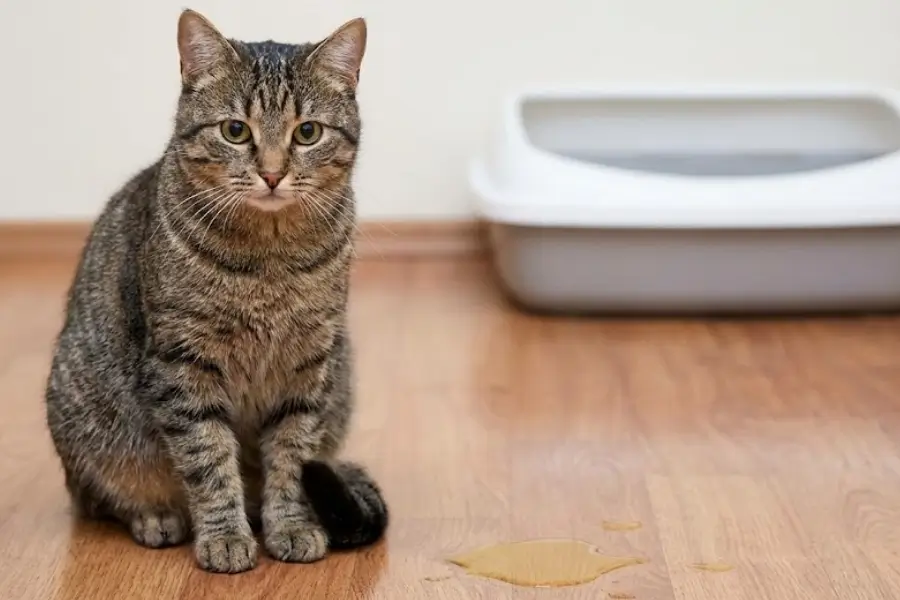
Finding a puddle of cat pee on your brand-new rug, your favorite armchair, or a pile of clean laundry is a moment every cat owner dreads. It’s frustrating, smelly, and can make you question your feline friend’s sanity, and your own. But before you jump to conclusions or consider drastic measures, it’s crucial to understand that your cat is not peeing outside the litter box out of spite. It is almost always a cry for help.
Inappropriate elimination is one of the most common reasons cats are surrendered to shelters. However, it is often a solvable problem. The key is to approach it with patience, empathy, and a detective’s mind. This article will guide you through the process of identifying the root cause and finding a solution that works for both you and your cat.

Medical Causes: The First Stop
Before assuming the behavior is behavioral, you must rule out a medical issue. Cats are masters at hiding pain, and peeing outside the litter box may be the only sign that something is wrong.
Common Medical Culprits Include:
– Urinary Tract Infections (UTIs): These are painful infections of the bladder or urethra. Your cat may associate the litter box with this pain and try to find a “safer” or more comfortable place to go.
– Feline Lower Urinary Tract Disease (FLUTD): This is a broad term for conditions that affect the bladder and urethra, including bladder stones, crystals, and idiopathic cystitis.
– Kidney Disease: As cats age, their kidneys can begin to fail, leading to increased thirst and urination.
– Diabetes: Similar to kidney disease, diabetes causes increased thirst and urination.
– Arthritis: If your cat is older or has joint problems, a litter box with high sides or one located in a hard-to-reach area may be too difficult or painful to access.
The Golden Rule: If your cat starts peeing outside the litter box, your first step should always be a trip to the veterinarian. A simple urinalysis can often rule out many of these common conditions.
Behavioral Causes: When It’s Not Medical
Once your vet has given your cat a clean bill of health, you can start investigating behavioral causes. These can be trickier to pinpoint but are equally important to address.
– 1. Stress and Anxiety: Cats are creatures of habit and can be deeply affected by changes in their environment. Changes in the home, new additions (like a baby or another pet), or conflict in a multi-cat household can be major sources of stress.
– 2. Litter Box Aversion: Sometimes, the problem is the litter box itself. Cats are fastidious animals and can be very particular about cleanliness, the type of litter used, the style of the box, and its location.
– 3. Territorial Marking: It’s important to distinguish between inappropriate urination and urine marking (spraying). Spraying is usually done on vertical surfaces and is a territorial behavior often triggered by the presence of other cats or threats to their space.
Solutions and Management: Getting Back on Track
Once you have an idea of the cause, you can start implementing solutions. Remember, this process takes time and patience. Never punish your cat for peeing outside the box. This will only increase their stress and fear, making the problem worse.
The “Golden Rule” of Litter Boxes:
The general rule of thumb is to have one litter box per cat, plus one extra. This helps prevent resource guarding and ensures there’s always a clean box available.
Follow a Strict Cleaning Protocol:
– Scoop: Scoop all litter boxes at least once a day.
– Deep Clean: Empty the box, wash it with mild soap and warm water, and refill with fresh litter every 1-4 weeks.
– Clean Accidents Properly: Use an enzymatic cleaner designed for pet odors to break down the uric acid crystals. Avoid ammonia-based cleaners, as they smell like urine to a cat.
Address Stress and Anxiety:
– Identify the Trigger: Try to pinpoint what is causing your cat stress and see if you can eliminate or minimize it.
– Feliway: Consider using synthetic feline pheromone diffusers to help reduce anxiety.
– Safe Spaces: Ensure your cat has plenty of safe, high places to retreat to.
– Enrichment: Provide plenty of mental and physical stimulation with interactive toys and scratching posts.
Make the Litter Box Appealing:
– Experiment: Offer different types of litter in separate boxes side-by-side to see which one your cat prefers.
– Go Big and Open: Try a large, uncovered litter box to help your cat feel less trapped.
– Accessibility: For older cats, look for a litter box with a low entry so they can get in and out easily.
Conclusion
A cat peeing outside the litter box is a stressful problem, but it’s not an insurmountable one. By approaching the issue methodically, starting with a vet visit to rule out medical causes and then investigating behavioral triggers, you can find the root of the problem and restore peace to your home. Remember, your cat is not trying to be difficult; they are trying to tell you something. With patience and understanding, you can decipher their message and get them back to using the litter box consistently.













0 Comments