
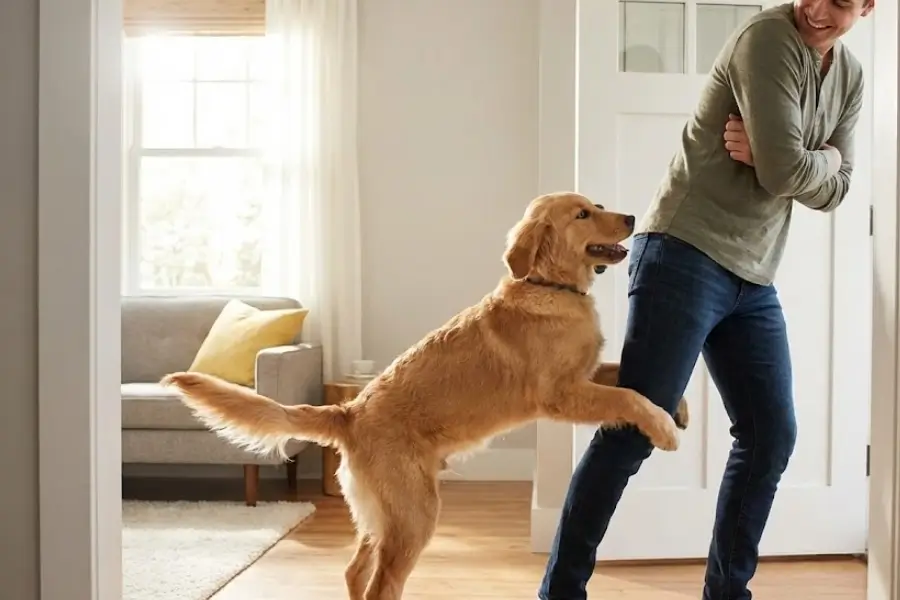
It’s a scene every dog owner knows all too well: the doorbell rings, and your beloved four-legged friend transforms into a furry projectile, launching themselves at whoever is unfortunate enough to be walking through the door. While it might be cute when they’re a 10-pound puppy, a 70-pound Labrador greeting Grandma with a chest-bump is less charming, and potentially dangerous.
If you’re tired of apologizing for muddy paw prints on your guests’ clothes or worrying about someone getting knocked over, you’ve come to the right place. Stopping your dog from jumping is one of the most common, yet most frustrating, behavior issues to tackle. But with patience, consistency, and the right positive reinforcement techniques, you can teach your dog to greet visitors politely with all four paws on the floor.
This comprehensive guide will walk you through the why, the what not to do, and a step-by-step plan to end the jumping bean routine for good.
Why Do Dogs Jump? The Psychology Behind the Leap
Before we can fix the behavior, we need to understand it. Why do dogs feel the need to get up close and personal with our faces?
– It’s How They Say Hello: In the dog world, greetings happen face-to-face. When puppies greet their mothers or other adult dogs, they often lick their muzzles as a sign of affection and submission. Since our faces are way up here, they jump to get to our level.
– Excitement and Over-Arousal: The arrival of a new person is a huge event for a social dog. The rush of adrenaline and pure joy can make it hard for them to control their impulses. Jumping is a physical manifestation of that overflowing energy.
– It Gets Them Attention: This is the biggest one. Even negative attention, like you pushing them down, shouting “No!”, or grabbing their paws, is still attention. To a dog, any interaction is better than none, so they learn that jumping is a surefire way to get you to engage with them.
Understanding that your dog isn’t being “bad” or dominant is crucial. They are simply acting on natural instincts and learned behaviors that have inadvertently been rewarded in the past.
What NOT to Do: Common Mistakes That Make Jumping Worse
Many old-school training methods are not only ineffective but can actually increase anxiety and make the problem worse. Here’s what to avoid:
– Kneeing the Dog in the Chest: This is outdated, cruel, and can cause serious injury. It also teaches your dog to fear you or the guest.
– Stepping on Their Back Paws: This is painful and destroys trust.
– Squeezing Their Front Paws: This can be interpreted as playful engagement by some dogs or as a frightening punishment by others. Either way, it’s not teaching them what you want them to do.
– Yelling “Down!” or “No!”: As mentioned, shouting is a form of attention. An excited dog may interpret your loud voice as you barking along with them, fueling their frenzy.
The Golden Rule: Four Paws on the Floor
The foundation of all successful training to stop jumping is a simple rule: Attention is only given when all four paws are on the floor.
This means no eye contact, no talking to, and definitely no petting your dog while they are jumping. You must become utterly boring and un-engaging until they choose to stop. The moment they do, you reward them with calm praise and affection. This teaches them that jumping makes the fun stop, while standing or sitting politely makes the good stuff happen.
Your Step-by-Step Action Plan
Ready to transform your chaotic greeter into a polite host? Follow this plan.
Phase 1: Management (Before They Are Trained)
Until your dog has learned better manners, you need to manage the environment to prevent them from practicing the unwanted behavior. Every time they jump and get attention, the habit gets stronger.
– Use a Leash: Before you open the door, put your dog on a leash. This gives you physical control and prevents them from making contact with the guest. You can step on the leash gently (giving them enough room to stand or sit comfortably, but not jump) to physically prevent the behavior.
– Use Baby Gates or a Crate: If your dog is too excitable to handle on a leash, put them behind a baby gate or in their crate with a stuffed Kong before the guest enters. Let them calm down before bringing them out on a leash to say hello.
– Toss Treats on the Floor: As a guest enters, immediately toss a handful of high-value treats on the floor away from the door. This redirects their energy downwards to a scavenging activity, which is incompatible with jumping.
Phase 2: Training the “Sit for Greeting”
The best way to stop an unwanted behavior is to teach an incompatible, desired behavior. A dog cannot be sitting and jumping at the same time.
– Start Without Guests: Practice in a calm environment. Walk towards your dog. If they jump, immediately turn your back, cross your arms, and look at the ceiling (like the man in the first image). Become a statue.
– Wait for the Sit: Wait. It might take a while. Your dog may jump on your back, bark, or get frustrated. Eventually, they will give up and likely sit down to figure out what’s wrong with you.
– Reward Immediately: The second their butt hits the floor, turn around, say “Yes!” or “Good sit!” in a calm, happy voice, and give them a treat. Pet them calmly under the chin or on the chest (avoid over-the-head pets, which can invite jumping).
– Repeat, Repeat, Repeat: Do this dozens of times a day. You want “human approaching = I should sit” to become muscle memory.

Phase 3: Practicing with “Setup” Guests
Once your dog is sitting reliably for you, it’s time to raise the criteria. Enlist the help of friends or family members to act as “guests” for training sessions.
– Prepare Your Guest: Before they arrive, explain the rules: “Please completely ignore the dog if he jumps. Turn your back. Do not look at him or talk to him until he is sitting. Once he sits, you can calmly give him this treat.”
– The Arrival: Have your dog on a leash. Your friend knocks. You open the door.
– The Interaction: If your dog jumps, the guest turns their back. You wait. When the dog sits, say “Good sit!” and indicate to the guest that they can now offer a treat and a calm pet.
– Reset if Needed: If the dog jumps up again as soon as they get attention, the guest immediately removes their attention and turns their back again. The reward disappears until the butt is back on the floor.
As seen in the illustration above, the goal is to have your dog sitting calmly on a leash while a guest rewards them. The leash provides a safety net, and the treat reinforces the polite sitting behavior.
Phase 4: Real-Life Application
Eventually, you can fade out the leash and the treats. Your dog will learn that the reward for sitting is the greeting itself.
– Consistency is Key: Every single person who enters your home must follow the rules. If one person lets the dog jump on them, it undoes weeks of training. You must be your dog’s advocate and instruct your guests.
– The “Oh, I Don’t Mind!” Guest: You will inevitably have a guest who says, “Oh, it’s okay, I love dogs!” while your 60-pound boxer is clawing their shoulders. You must politely but firmly say, “I mind. We are training him. Please turn your back until he sits.”
– Be Patient: This behavior won’t disappear overnight. It’s a process of rewiring your dog’s natural instincts. There will be setbacks. Just stick to the plan, keep greetings calm, and reward the behavior you want to see.
Conclusion
Stopping your dog from jumping on guests requires a shift in mindset from “how do I stop him from doing that?” to “what do I want him to do instead?”. By removing the reward for jumping (attention) and heavily rewarding an incompatible behavior (sitting), you can teach your dog that polite manners are the fastest ticket to the love and affection they crave. It takes time and consistency, but the result, a calm, well-behaved dog that everyone is happy to see, is well worth the effort.












0 Comments